Assess
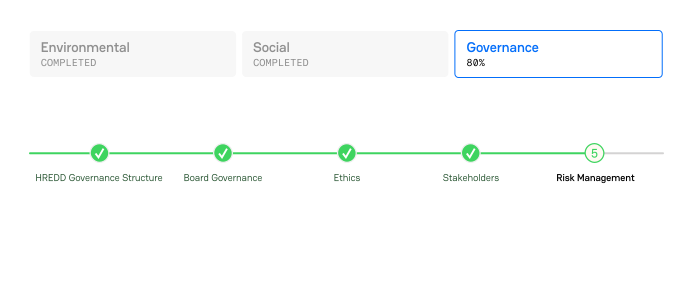
Ask each supplier only what matters for their role and risk

Find it. Fix it. Prove it.
Ollint uncovers your supply chain’s human rights and environmental risk—so you always know what to fix first.
Book a Free Demo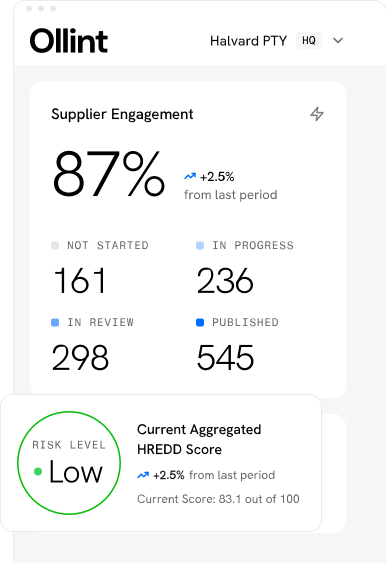
Corporate Sustainability Due Diligence Directive. EU law that requires large companies to carry out human rights and environmental due diligence across their own operations, subsidiaries and value chains. creates civil liability for harm caused in supply chains.
The industry benchmark is ~40% supplier completion on assessments, leading to non-compliant reporting.
Enterprise platforms cost €200K+ a year and take several months to implement, leaving your team to figure out remediation on their own.
Ollint is the only Human Rights and Environmental Due Diligence. The process companies use to identify, prevent, mitigate and account for human rights and environmental harms across their operations and supply chains. supply chain platform built around the full compliance loop, not just data collection.
Rapid and comprehensive supplier assessment, at scale.
Industry- and size-matched supplier assessments, mapped to the frameworks that matter.
Every supplier is assigned a questionnaire calibrated to their industry and size — so assessments are relevant, proportionate, and defensible. Assessment outputs map directly to Corporate Sustainability Due Diligence Directive. EU law that requires large companies to carry out human rights and environmental due diligence across their own operations, subsidiaries and value chains., United Nations Guiding Principles on Business and Human Rights. The global framework, endorsed by the UN in 2011, that sets out the state duty to protect, the corporate responsibility to respect and access to remedy., EU Deforestation Regulation. EU regulation that requires companies placing commodities such as cocoa, coffee, soy, palm oil, cattle, rubber and wood on the EU market to prove they are deforestation-free and legally produced., Global Reporting Initiative. The most widely used international standards for sustainability reporting, covering an organisation's impacts on the economy, environment and people., International Sustainability Standards Board / IFRS Sustainability Disclosure Standards. Global baseline standards for investor-focused sustainability disclosure. S1 sets general requirements and S2 covers climate-related disclosures., King V Code on Corporate Governance. The latest edition of South Africa's corporate governance code, issued by the Institute of Directors in South Africa (IoDSA). It sets principles for ethical leadership, sustainability and integrated reporting., and Broad-Based Black Economic Empowerment. South Africa's policy and scorecard framework for advancing economic transformation. It covers ownership, management, skills development, enterprise and supplier development, and socio-economic development., giving buyers the evidence trail they need to demonstrate Human Rights and Environmental Due Diligence. The process companies use to identify, prevent, mitigate and account for human rights and environmental harms across their operations and supply chains. and EU Deforestation Regulation. EU regulation that requires companies placing commodities such as cocoa, coffee, soy, palm oil, cattle, rubber and wood on the EU market to prove they are deforestation-free and legally produced. compliance without additional reporting work.
Remediation workflows, not just a score.
Guided Remediation Action Libraries turn assessment findings into tracked, manageable improvement plans, so a flagged risk becomes a resolved one, not a dead end.
Each supplier receives a detailed individual report—including their remediation action plan—delivered directly to them, so improvement starts at the source.
Board-ready, regulator-ready documentation.
Portable supplier credential reports create a verified audit trail across every assessment and every remediation action—automatically.
That trail is exactly what's required to defend against Corporate Sustainability Due Diligence Directive. EU law that requires large companies to carry out human rights and environmental due diligence across their own operations, subsidiaries and value chains. civil liability claims and to support EU Deforestation Regulation. EU regulation that requires companies placing commodities such as cocoa, coffee, soy, palm oil, cattle, rubber and wood on the EU market to prove they are deforestation-free and legally produced. operator statements, creating a documented process to help protect against legal liability.
Ollint results in 65%+ supplier engagement, verified with Ivanhoe Mines and published in their 2025 Sustainability Report. Ollint allows portable supplier credentials and a single workflow built to satisfy Corporate Sustainability Due Diligence Directive. EU law that requires large companies to carry out human rights and environmental due diligence across their own operations, subsidiaries and value chains., EU Deforestation Regulation. EU regulation that requires companies placing commodities such as cocoa, coffee, soy, palm oil, cattle, rubber and wood on the EU market to prove they are deforestation-free and legally produced., Global Reporting Initiative. The most widely used international standards for sustainability reporting, covering an organisation's impacts on the economy, environment and people., International Sustainability Standards Board. Global baseline standards for investor-focused sustainability disclosure., King V Code on Corporate Governance. The latest edition of South Africa's corporate governance code, issued by the Institute of Directors in South Africa (IoDSA). It sets principles for ethical leadership, sustainability and integrated reporting., and Broad-Based Black Economic Empowerment. South Africa's policy and scorecard framework for advancing economic transformation. It covers ownership, management, skills development, enterprise and supplier development, and socio-economic development. at once.
Assess
Ask each supplier only what matters for their role and risk
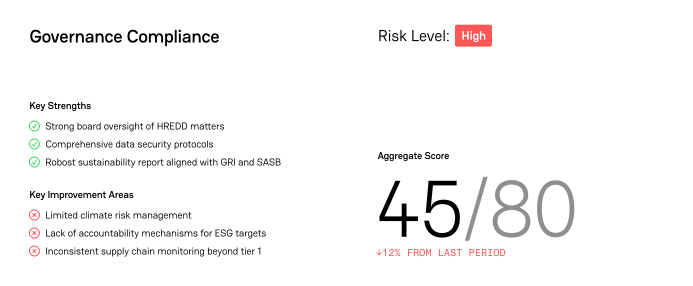
Report
Turn raw responses into reports your board can trust
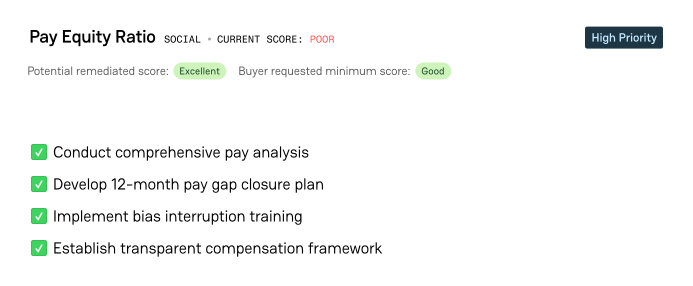
Improve
Equip suppliers with clear, actionable steps to close their gaps
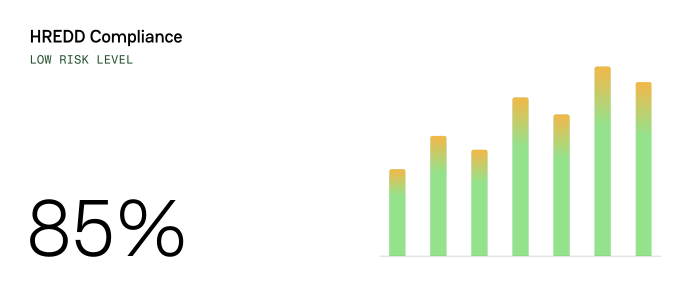
Monitor
Track risk posture and progress across your chain in one place
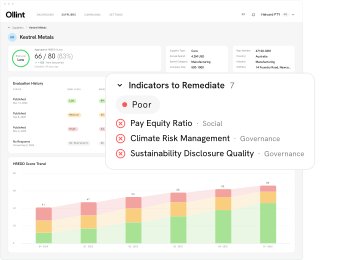
Ask each supplier only what matters for their role and risk
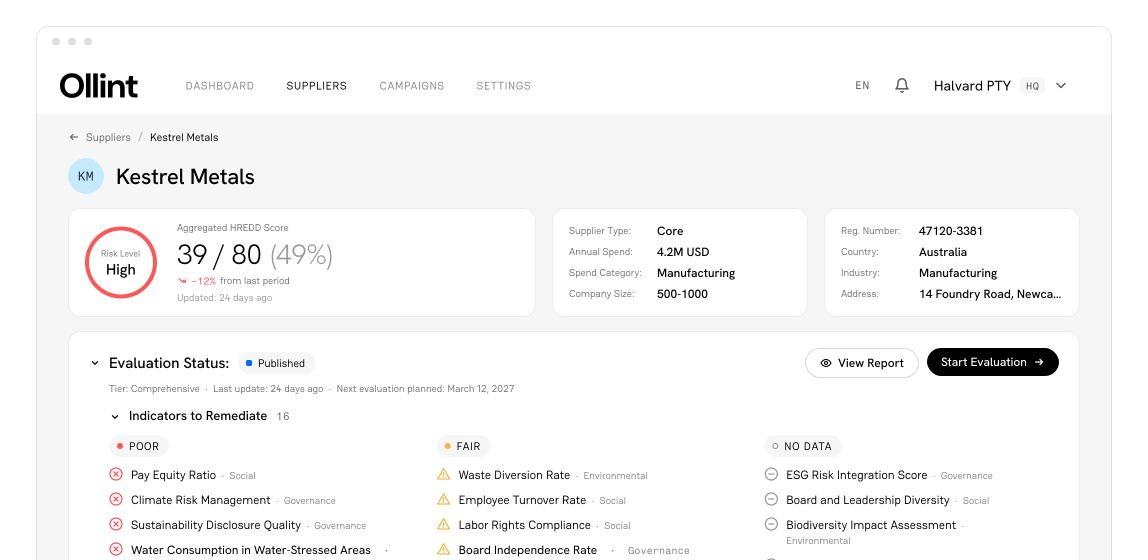
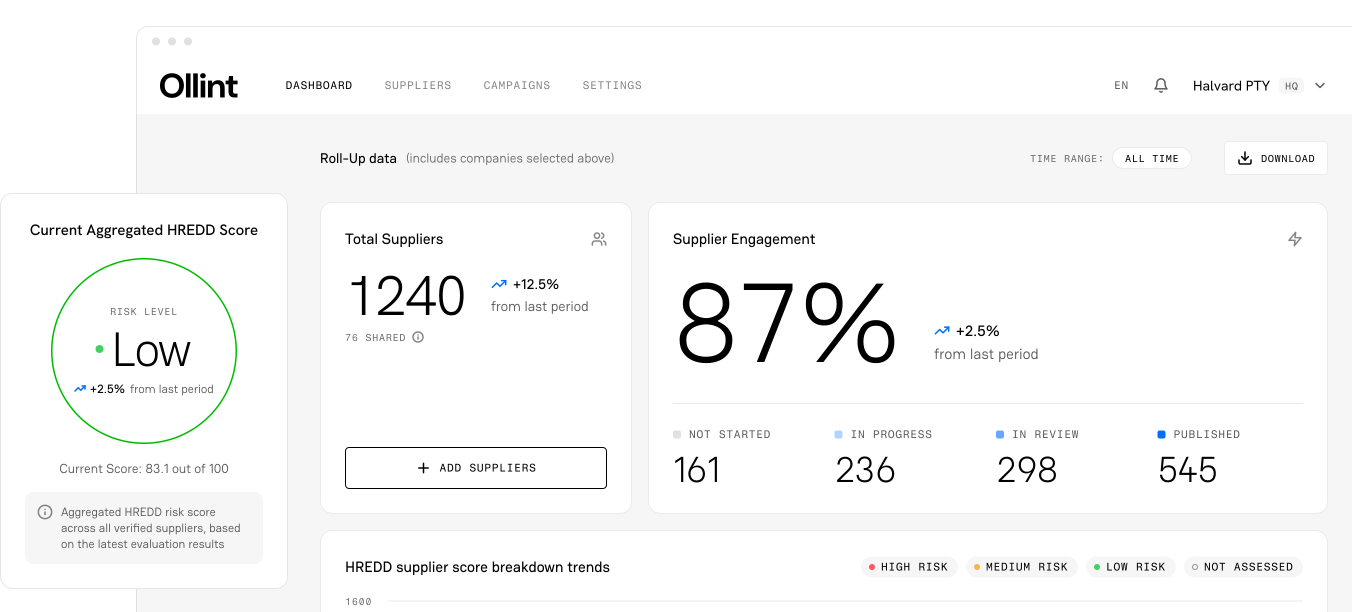
Supplier risk, evaluations and remediation progress in one dashboard.
Modern slavery, child labour, and forced labour exposure are boardroom-level risks driving reputational damage, impacting revenue, and result in tighter lending covenants and Human Rights and Environmental Due Diligence. The process companies use to identify, prevent, mitigate and account for human rights and environmental harms across their operations and supply chains. downgrades.
Regulation is moving faster than most compliance teams can keep up with:
The tools built to solve this haven't kept up. Legacy audits are point-in-time, paper-heavy, and adversarial, leaving suppliers to engage with them at a rate of roughly 40%, industry-wide. Existing enterprise platforms built to replace them are priced and designed for companies with budgets and headcount most mid-market organizations don't have.
For Sustainability and Compliance Leaders:
For the Team Doing the Work:
No lengthy implementation project, no IT integration required to get started. We begin with a scoping conversation to understand your supplier base, your regulatory obligations, and where your current programme has gaps. From there we configure your assessment framework, onboard your team, and get your first suppliers into the platform.
You don’t have to brace for the cost of supply chain due diligence. Supply chain due diligence doesn’t have to be a cost centre you’re bracing for. With Ollint, it becomes a documented, defensible process your board can rely on, and a proven engagement solution for your suppliers.
Contact us if you want to become an Ollint partner